-
Hospitality / Sadu weaving / Desert
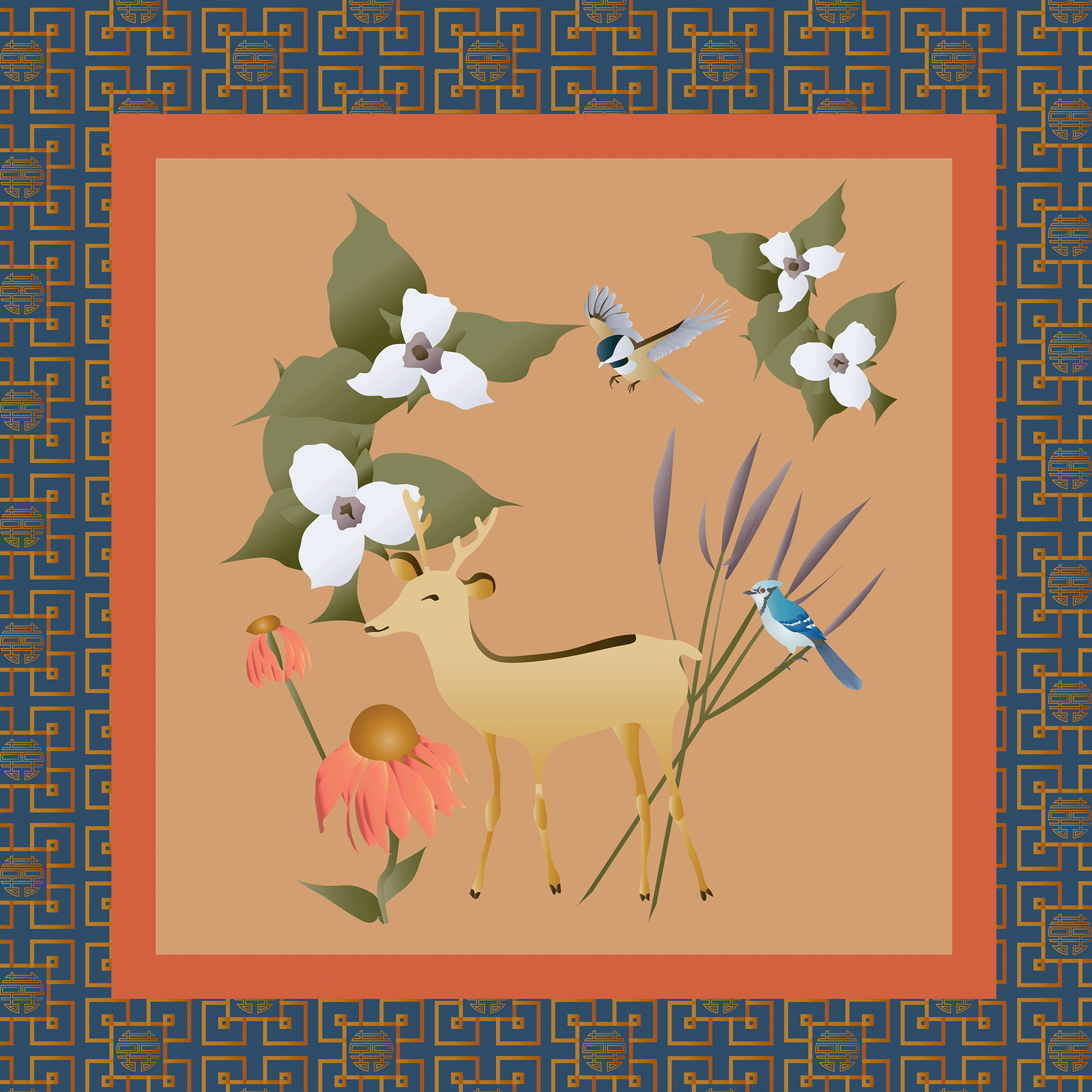
This artifact is a conceptual architectural model inspired by the cultural, natural, and symbolic elements of Saudi Arabia. The primary form is derived from the Saudi palm tree, one of the most powerful national symbols representing life, prosperity, generosity, and resilience in the desert environment. Palm trees historically provided food through dates, shade from the harsh climate, and materials for construction, making them deeply connected to survival and hospitality in Saudi culture. In the model, the layered curved canopy elements abstract the spreading palm fronds, creating a sense of shelter and protection. The vertical central structure represents the strength and stability of the palm trunk, emphasizing growth and rooted identity.
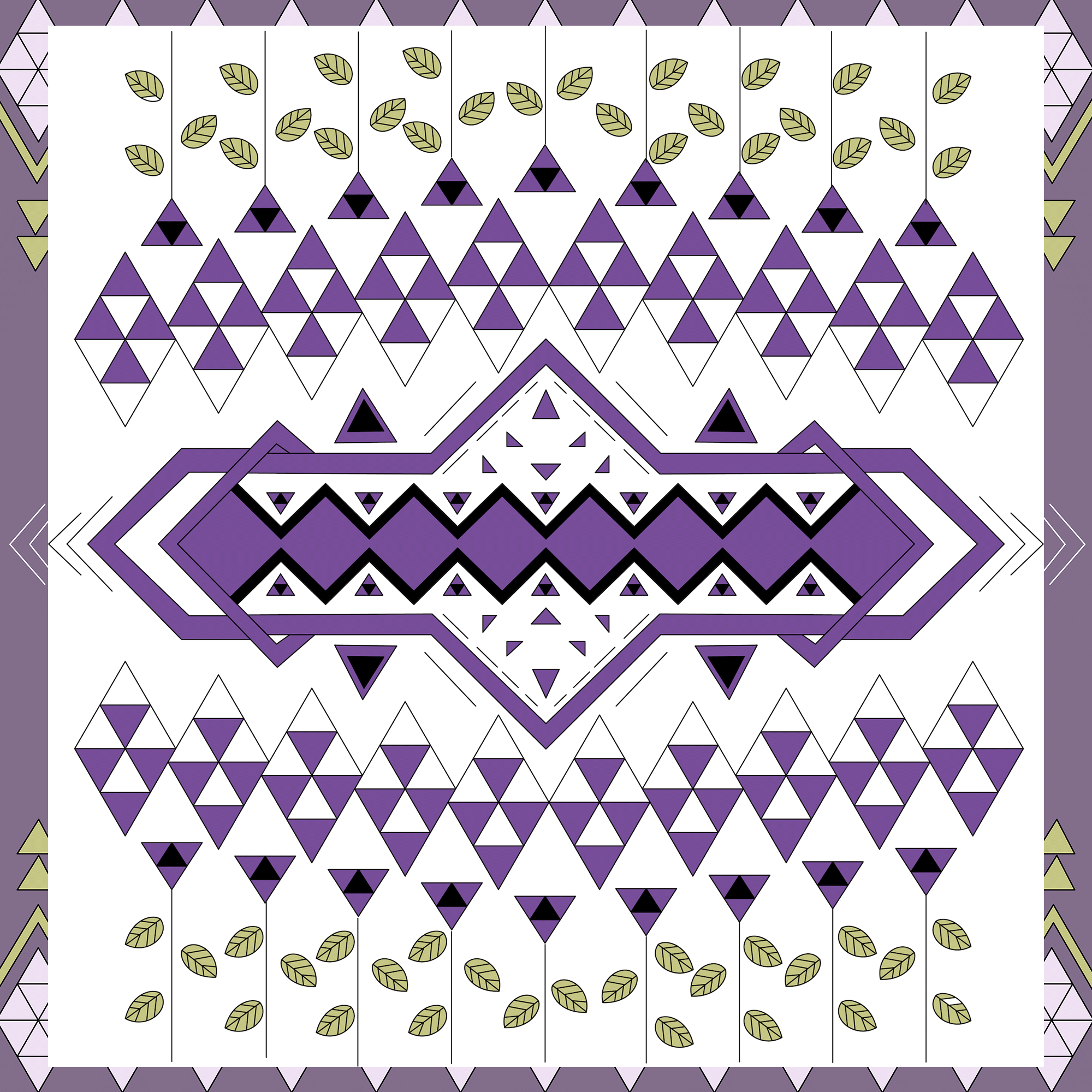
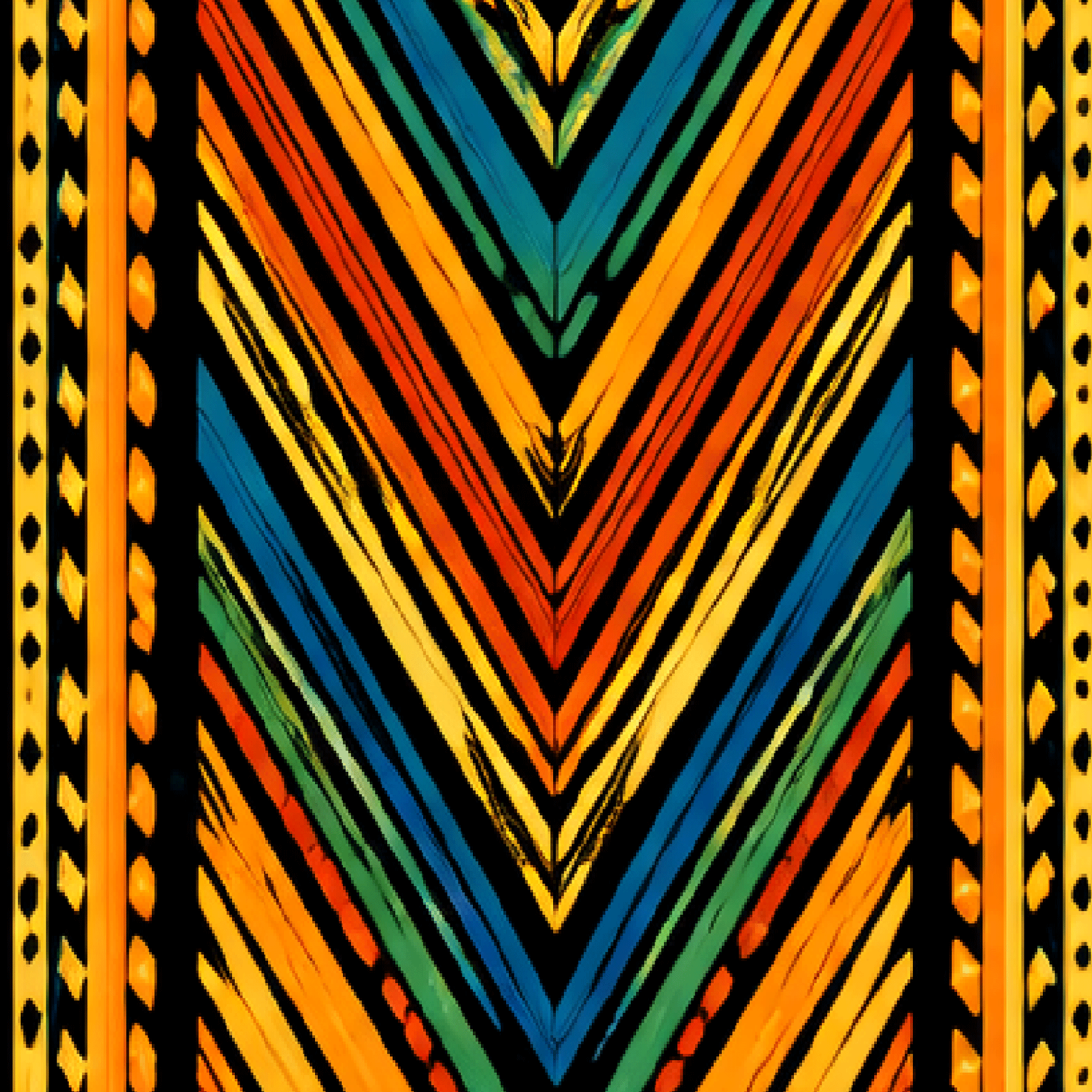
Geometric patterns play a significant role in the artifact’s design. Inspired by traditional Saudi textiles, Sadu weaving, and architectural ornamentation, the repeated triangular and diamond motifs symbolize desert dunes, mountains, balance, and unity. These patterns are integrated into the hanging elements and surface textures, adding rhythm, movement, and cultural storytelling to the form. The suspended patterned components also create a dynamic visual experience, suggesting dates hanging from palm branches while enhancing lightness and spatial depth.
Color is another key inspiration. The dominant lavender and purple tones reflect a contemporary color identity associated with Saudi Arabia, representing creativity, transformation, and modern cultural expression. The translucent purple canopy contrasts with the more solid structural elements, visually expressing the relationship between tradition and innovation. Supporting colors drawn from a broader palette help reinforce harmony and connection to the Saudi landscape and heritage.
Overall, the artifact explores how traditional symbols and patterns can be reinterpreted through modern materials and abstract architectural language. It represents a fusion of heritage and future vision, transforming cultural inspiration into a sculptural structure that could function as a pavilion, installation, or landmark celebrating Saudi identity. -
Bold / Free / Authentic
Beyond the Chains represents my recent transition—from who I believed others wanted me to be, to who I truly am.
Growing up, I was chained to the opinions of others. All I ever wanted was acceptance, so I changed myself to fit what I thought people wanted to see. As humans—especially in this generation—we care deeply about how we are perceived: how many likes we get, how many friends we have, and how closely we fit into society’s expectations.
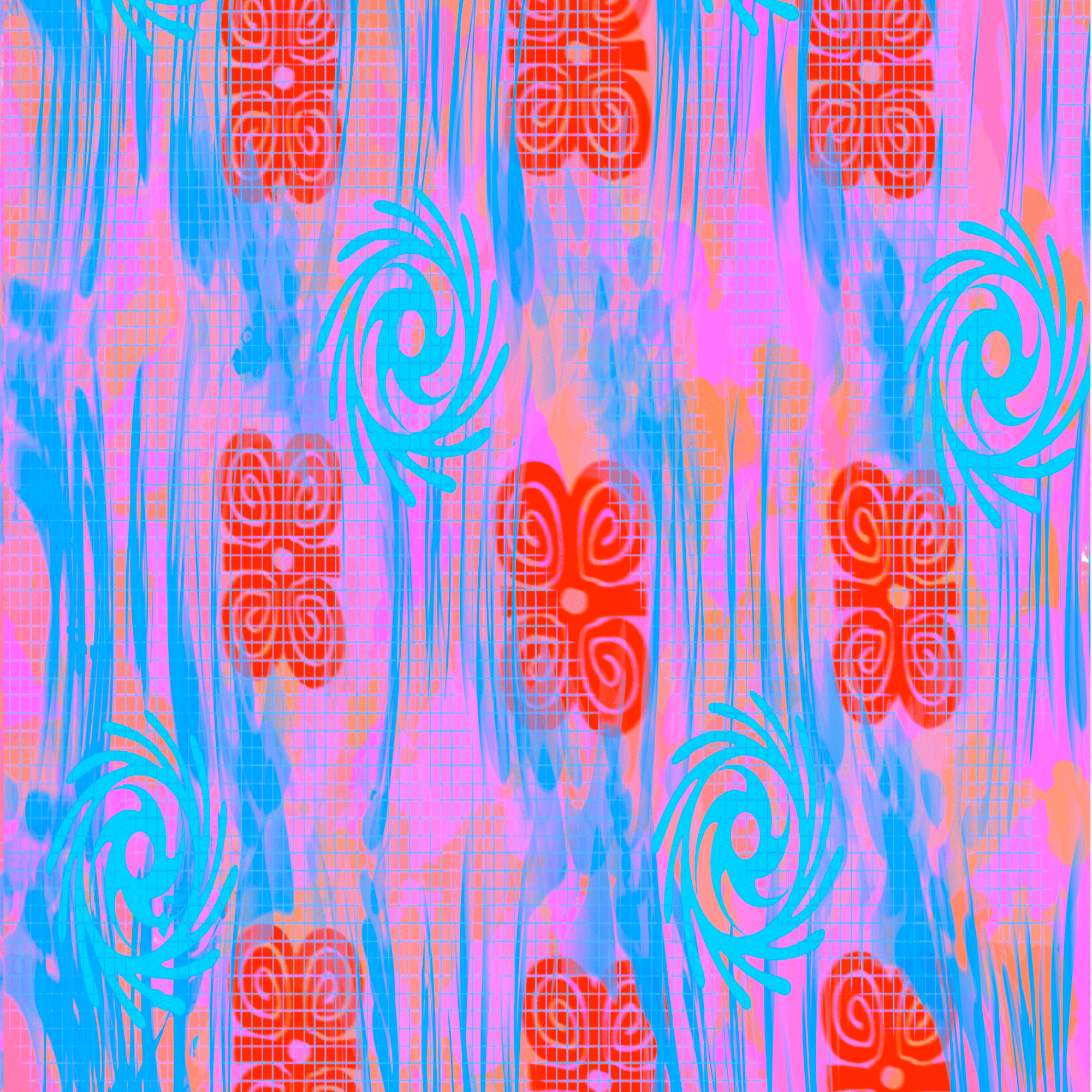
This artifact is meant to encourage people to free themselves from those chains. I drew inspiration from my Ghanaian heritage, using traditional prints and Adinkra symbols such as Gye Nyame, Dwennimmen, Fawohodie, Osram ne Nsoromma, and Sesa Wo Suban. Each of these symbols represents themes of freedom, spiritual growth, strength, and transformation.
Beyond the Chains serves as a reminder that our freedom is greater than the limitations the world tries to place on us. As Nina Simone said, “I’ll tell you what freedom is to me: no fear.” This piece invites others to release their need for external acceptance and instead walk confidently as who their spirit is calling them to be. -
Vivid / Intertwined / Pictish
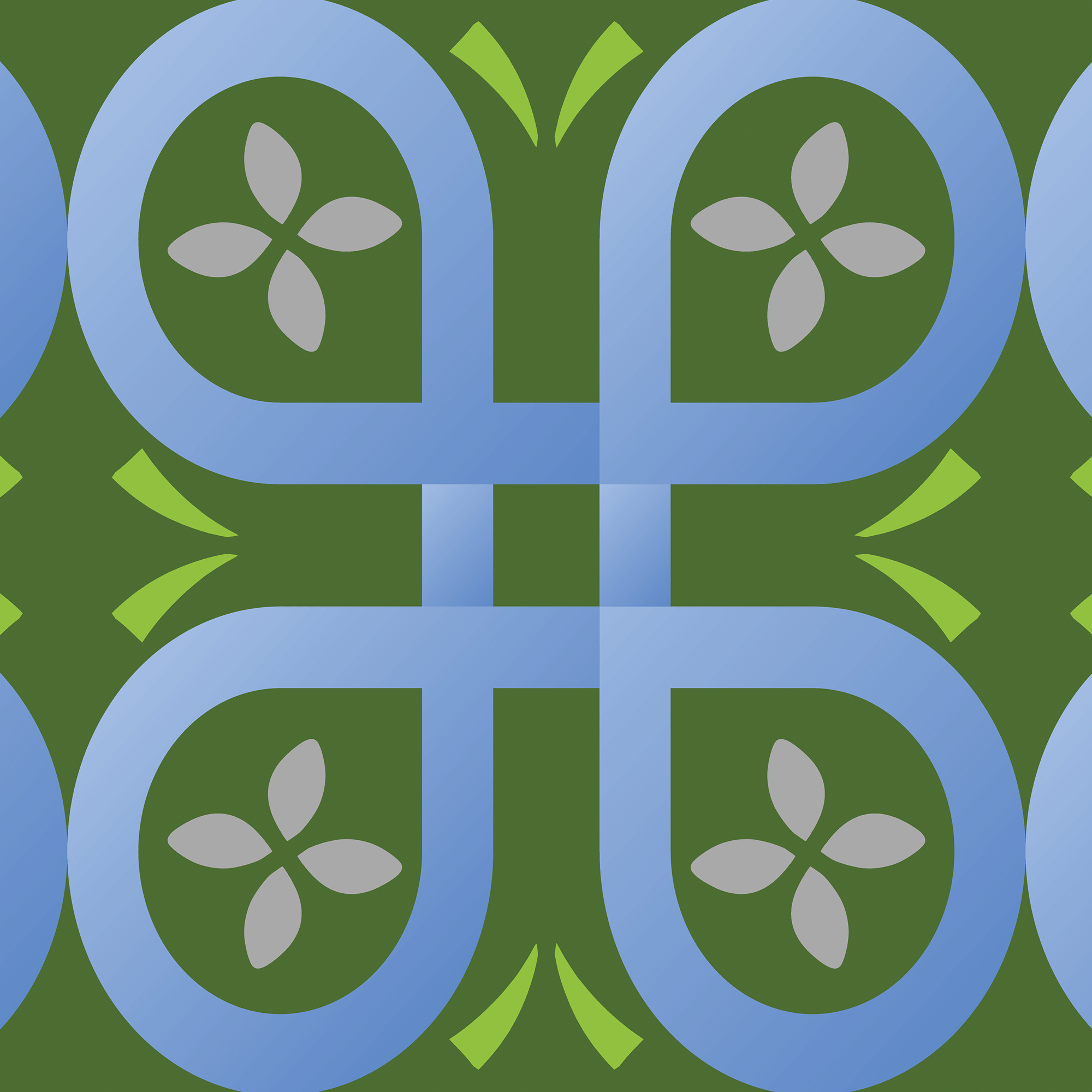
This artifact brings together visual traditions from both Irish and Scottish Celtic cultures, into a single piece. The exterior panels are large, interwoven Celtic knots, with the front panel being entirely engraved. The knot chosen is the Bowen knot, often referred to as the True Lover’s Knot. With its unbroken lines, this design symbolizes eternity, loyalty, and the bonds between people. By creating the structure through these knots, I’m emphasizing the visible and shared aspects of cultural identity. Patterns and symbols that are immediately recognizable.
In contrast, the interior shelves feature engraved Pictish symbols, pulling from the ancient language of early Scotland. Only surviving through carvings and artwork. These symbols which are more abstract and less understood than the knots, represent a more personal connection to heritage. They are placed within the structure, suggesting that identity is not only what is shown outwardly, but also what is carried internally, shaping who we are, even if it’s done quietly.
The physical connection between the exterior panels and the interior shelves reflects the connection of these traditions. Although distinct in origin and style, they are bound together within the same space. This piece aims to express that one’s heritage is not divided by geography or history, but rather woven together through shared meaning and memory.
“Is i an dualchas a tha gar ceangal ri chèile” heritage is what binds us together. -
Ancestral / Narrative-driven / Spiritualized
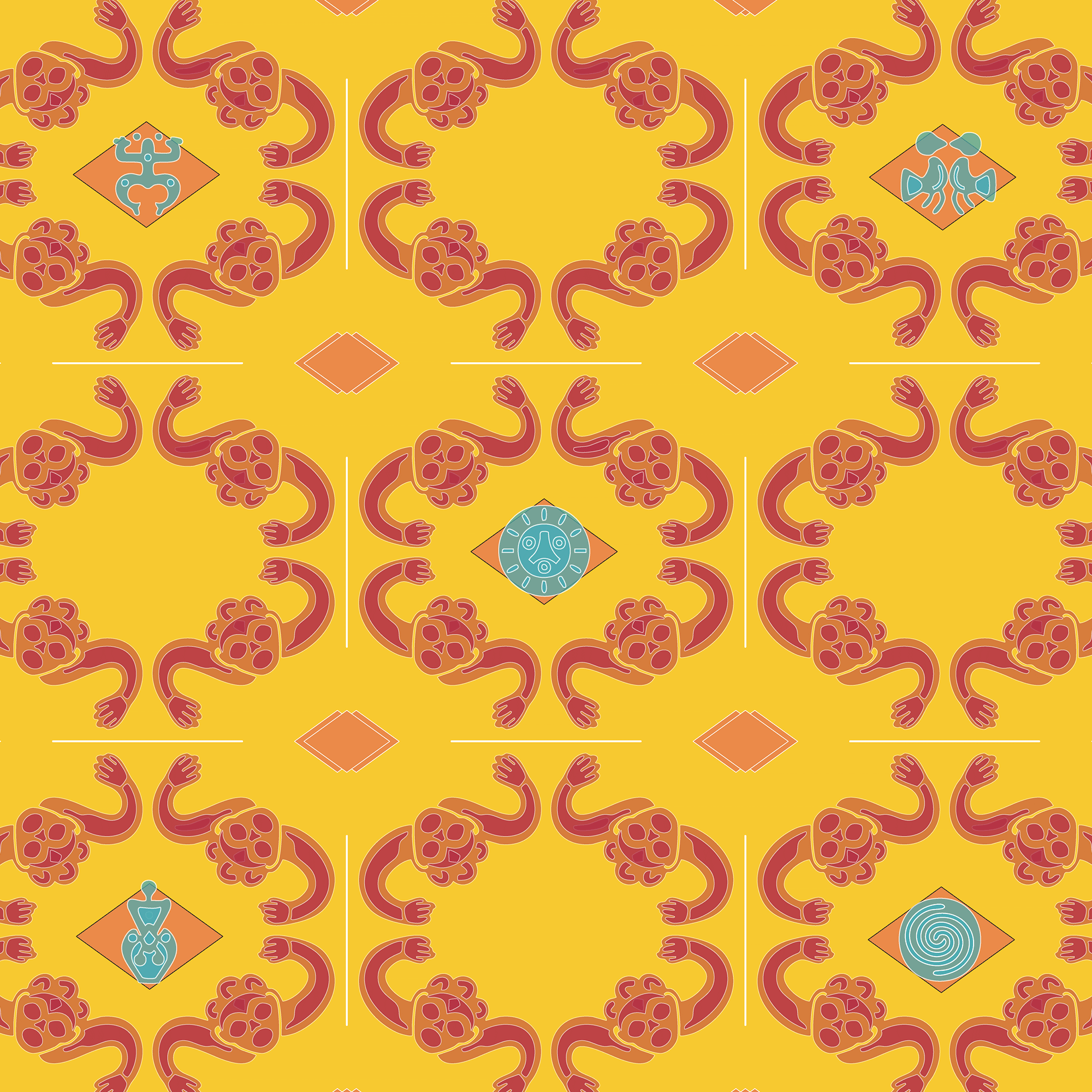
This artifact emerges from engagement with the history and symbolic language of the Taíno people, an Indigenous culture of the Caribbean whose presence and legacy is being reintroduced by modern cultural revitalizationists. Rooted in personal ancestry of the artist, the work operates as both a material exploration and a cultural reclamation, translating ancestral knowledge into a contemporary visual form.
The Greater Antilles—comprising Cuba, Hispaniola (present-day Haiti and Dominican Republic), Jamaica, and Puerto Rico—served as the primary geographic locus of Taíno civilization. Among these islands, Hispaniola and Puerto Rico supported some of the largest Taíno populations prior to European colonization. Flourishing approximately between 1000 CE and the late 15th century, Taíno societies developed complex systems of governance, spirituality, and artistic production, much of which is encoded in their symbolic repertoire.
Constructed primarily with 1/8-inch laser-cut acrylic, the artifact employs modern fabrication techniques to reinterpret traditional motifs. The engraved surfaces incorporate widely recognized Taíno symbols—often associated with cosmology, zemis (spiritual entities), and natural forces—alongside a recently developed composite pattern that synthesizes these elements into a personalized visual language.
The artifact was built to intentionally take on the shape of a hurricane, when in motion. This form was chosen to serve as a representation of Guabancex, the Taino goddess of chaos, destruction, and creator of windstorms known as Juracán (hurricane).
This form is also meant to serve as a metaphor to express the artist’s personal view of current social and political environments—turbulent, unpredictable, and uneven in its impact. Like a storm, this moment is defined by cycles of intensity, where underlying tensions rapidly escalate and expose systemic vulnerabilities. The swirling motion reflects the circulation and amplification of conflict across social and geographic boundaries, while the eye suggests fleeting moments of clarity amid instability.
Other materials used include acrylic paint and multi-colored gold leaf used to introduce chromatic depth and reflective qualities, evoking both ornamentation and the luminosity often associated with spiritual presence. Ostrich feathers extend the artifact into a tactile and atmospheric dimension, while integrated model lighting activates the engravings, casting shadows and emphasizing the layered nature of the symbols.
Ultimately, the artifact functions as a dialogic object—bridging past and present, tradition and innovation. It invites viewers to consider how ancient cultures can be preserved, reinterpreted, and made visible through material practice, while also asserting a personal connection to a lineage that persists despite historical disruption. -
Nature / Colorful / Geometric
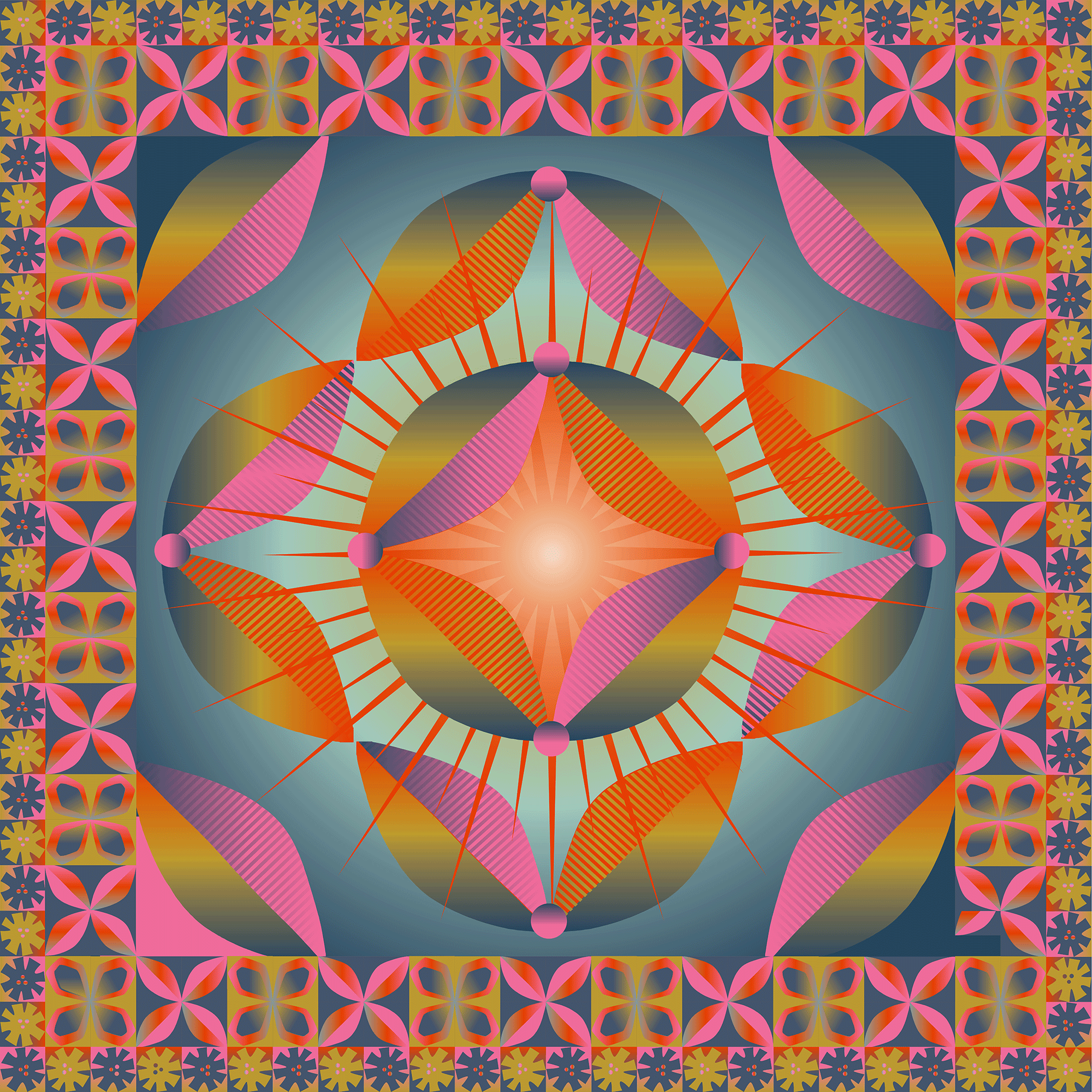
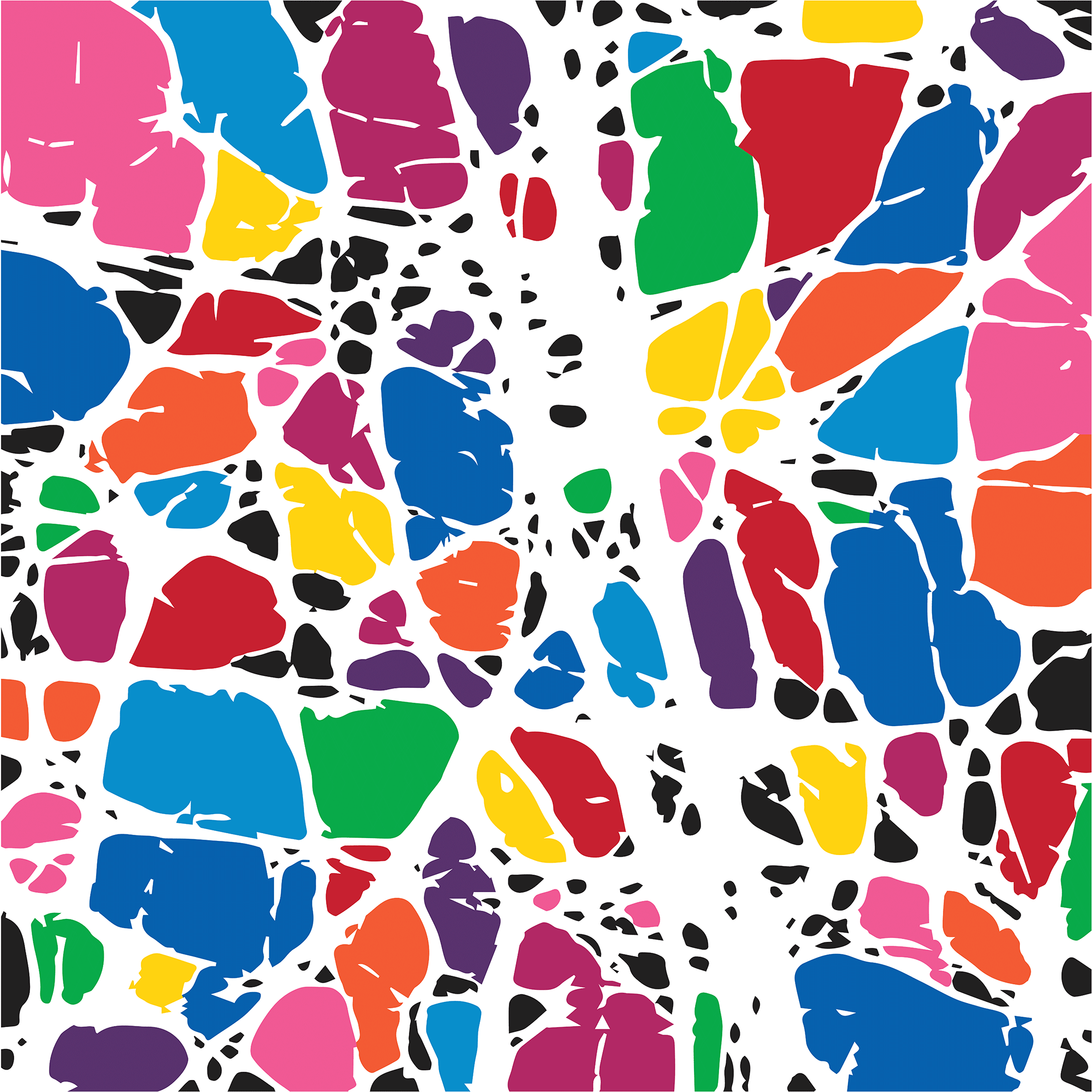
For this project, I was inspired by the beauty of nature in my home state of West Virginia as well as various traditional Appalachian crafts. My artifact represents a tree with branches sticking out that is pieced together using many different patterns, like a quilt. For my colors, I used blues, greens, and reds in natural hues that you would find outdoors. Nature is very important to me, and it appears often in my work. For some of my patterns, I took inspiration from the sky, the forests, and flowers to create more abstract prints. Others were drawn to imitate chicken scratch embroidery, which is a type of embroidery done on gingham fabric and stitched in a way that emulates lace. To make my artifact more personal, I wanted to make sure to incorporate specific crafts that I did when I was younger, such as quilting, chicken scratch embroidery, and fiber arts like knitting and crochet. The green knit fabric on the bottom of the piece was knitted on a domestic knitting machine and made to look like the ground at the bottom of the tree.
-
Chaotic / Vibrant / Abstract
Rhino Trail is inspired by the identity and experience of being African American. This artifact conveys art that connects with my Nigerian heritage which makes up only a quarter of my DNA but is the highest percentage. When developing my artifact I started sketching ramps that collided and gradually stacked on top of each other while ascending. These ideations led me to think about the confusion of identity and the struggles of being black in America. Which sparked the name “Rhino Trail”. In Africa the Rhino is the animal with the toughest skin in the mammal category and the “Trail” is the representation of African Americans trying to climb the totem pole or advanced status in America. African Americans can reach certain power chairs but there is always a great cost that comes with doing so. The ramps have holes and cutouts throughout to convey the obstacles that occur while you are trying to reach the finish line. The top two clear ramps without damage represent safety. If you are on the lower ramp you are safe but still under control, if you are on the top ramp you have made it but don’t look down because you can still fall. My prints that I have created are inspired by Nigerian contemporary art and traditional Nigerian textile techniques. Inspired by the amount of color and emotion used in Nigerian contemporary art led to the inverted batik design named “sacred skin" and the distorted woven aso oke stripes which I named “behind bars”. When you examine this piece, think about what obstacles you have overcome to be in the position you are in today and how you will become better for the next challenge.
-
Vibrant / Playful / Contemporary
My artifact is an abstract hand form with bangles, made using layered acrylic sheets with different levels of transparency. I am interested in how these layers can create depth, so the piece changes slightly depending on how it’s viewed, and the use of transparent and opaque materials helps bring out that layered effect. The main concept behind this piece comes from resist dyeing techniques in India. In these processes, certain parts of the fabric are covered or tied to prevent dye from reaching them, which creates patterns by contrast. I found this idea of “resisting” really interesting and wanted to explore how holding something back can actually help form the final design. I tried to translate this idea into my artifact by using layers of acrylic to show different stages of the process. Some parts are more transparent, while others are more solid, similar to how dye either reaches or doesn’t reach certain areas in fabric. The motifs I created are inspired by resist-dyed patterns, and I’ve used them both as prints for fabric and as engravings on the acrylic surfaces.
The hand is abstract so it doesn't become too literal, but it still takes you back to the idea of making and wearing. The bangles are included to reference traditional Indian adornment and how textiles and accessories often relate to each other. To me, this piece is about taking a traditional textile technique and exploring how it can be expressed in different materials and forms, while still keeping the original idea behind it. -
Light / Shadow / Reflection
The concept of my artifact stems from an exploration of my cultural identity, and how that is directly tied to my heritage and genealogy. Through the exploration I wanted to honor the skills and experience passed down to me from my family through them asking themselves the same question of identity throughout their lives, and to translate their embodied experiences and mine into something beautiful for others to interpret and experience. To translate these invisible qualities into something tangible all started from a set of French curves gifted to me by one of my great aunts when I was a young adolescent. While I have been drawing ever since I could hold a pencil, I have never used these curves until I started this process. Producing a hand drawing to the highest ceiling of skill that I could muster, and by starting from and honoring these specific curves was a way to honor and give thanks to my aunt. To show a sense of respect from one artist to another, as she has undoubtedly done before. The pattern the artifact rests upon is a pattern of light. I held up one of the curves at one pivot point touching a mirror and photographed the process of radially rotating the curve about the pivot point as it goes closer to parallel to the mirror. By stacking the images and adjusting the opacity of each image in a way to see the entire process of pivoting the curve from start to finish, and adjusting the midtones, shadows and highlights of the entire stack, the result is the printed pattern of light from a fixed time and motion. The artifact itself is etchings of a hand drawing. The method of producing the drawing comes from a unique process I have developed through my time at school this time being specific to the French curves themselves. I started the drawing by using only the shapes of the French curves to give me outlines of space to fill in and work with. In this way, the drawing process can abstractly be thought of being done just as it began. The whole process required an intense focus on continually creating and co-creating analogies and relationships from each initial prescribed curve, and every new curve and line drawn in succession, by drawing on basic connotations from the natural world—eyes, beaks, tails, fins, and wings—all playing on the cognitive phenomena of pareidolia. The last curve has a direct relation with the first curve drawn in a way where you can’t tell beginning from the end. I adhered to a principle of that sort through purposeful evaluation and re-evaluation of the 2-dimensional lines interpreted or seen in a 3-dimensional form, all while setting a standard of not allowing a single line to be erased. The result are beings that wind up in different stages of evolution, where each stage is captured and apparent when viewing at all scales, at once or individually. There is an intention of an uncanny feeling of familiarity with the expressions each being is showing, as the way I may interpret one being brings forth a feeling, thought or experience that my aunt has also felt, thought, or experience. This is all with intention of just the right amount of ambiguity and uncanniness for others to find and relate with in the same vein, through matters that relate specifically to themselves, for themselves, and their own personal cultural identity, heritage, and genealogy.
-
Joyful / Celebratory / Bold
“The thing which we speak of as beauty does not have to be sought in distant lands… it is here about us or it is nowhere” – Allen Tucker
We are consistently surrounded by beauty, and yet have trouble locating it. We often find it in the ornate, ignoring what lies directly in front of us. This is especially true for those who have grown up in the American Heartland. Often used as a scapegoat in American politics, the American Heartland is dismissed as an indiscretion. This perception not only emphasizes a division within America, but also perpetuates myths and notions surrounding blue-collar, working-class people. Recognizing these communities for their nuanced beauty is a step towards understanding the American Heartland and the people who reside there.
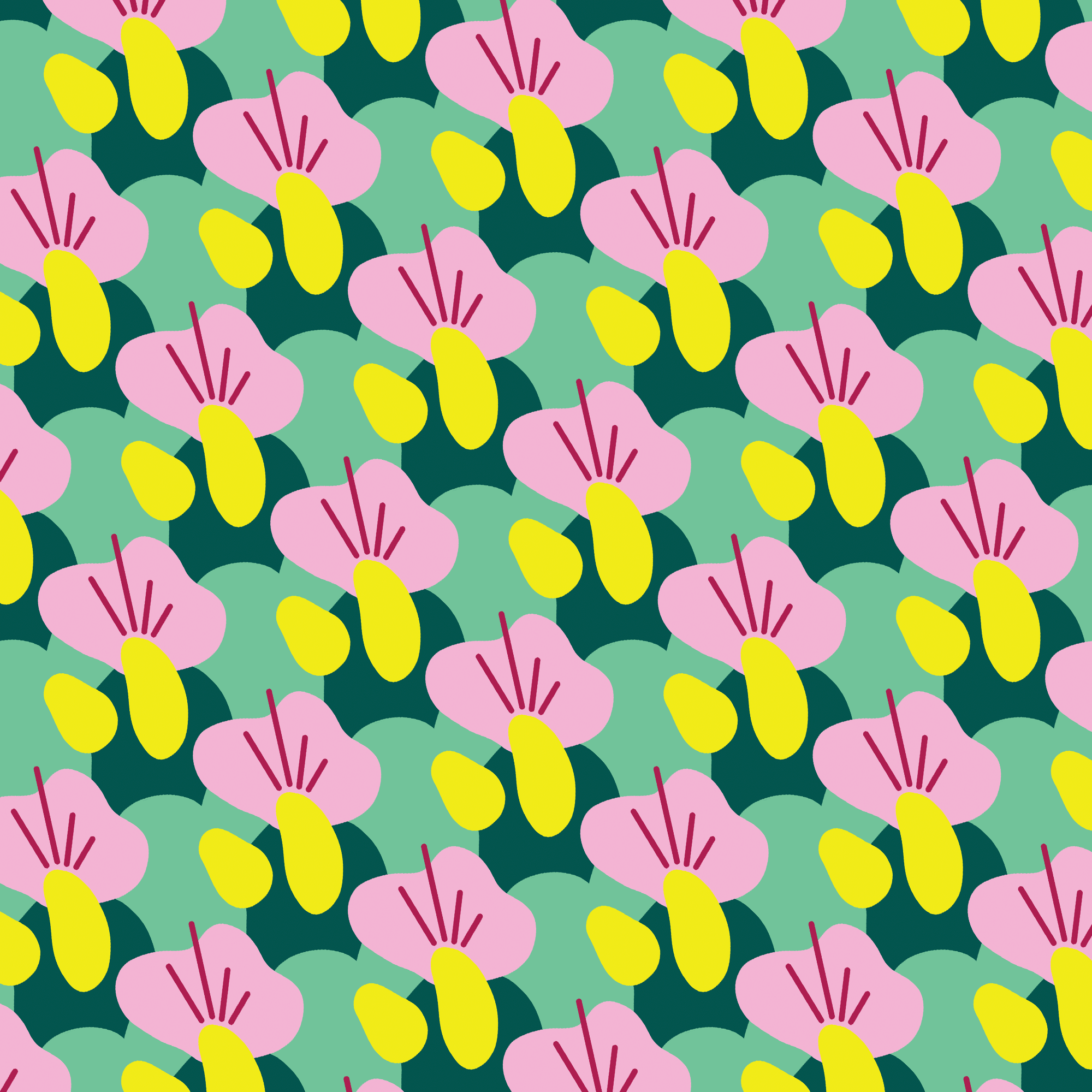
Sophia Macro, the artifact’s artist, is a proud Midwesterner originating from Des Moines, Iowa. Designed as an interpretation of Iowa’s rolling hills and native plants, this artifact not only recognizes the American Heartland’s nuanced beauty but celebrates it. These natural motifs are translated into geometric prints that reflect the artist’s eclectic spirit and design aesthetic. Vibrant colors and bold shapes adorn the artifact’s front, while the back remains plain. Depending on the viewers’ perspective, this artifact tells different stories, further emphasizing the dissonance between the American Heartland’s perception and its reality. -
Illuminating / Rooted / Timeless
This artifact model represents my African heritage through a layered composition of growth, ancestry, and personal identity. The overall form takes on an organic, tree-like structure, symbolizing life, resilience, and the way culture is continuously shaped over time. Rather than referencing a single idea, the model brings together different elements that reflect both shared cultural traditions and my own lived experience.
The vibrant orange circular element at the top acts as a symbolic sun, representing life, energy, and guidance. This element is especially meaningful to me because my Nana, who is very special in my life, used to call me her “sun”. That personal connection transforms the piece into something deeply intimate, tying my identity to love, warmth, and generational memory. The sun is made from fabric that I created, emphasizing the importance of making and material as a way of expressing culture.
Throughout the structure, I integrated additional fabrics I designed, embedding them within the model as another layer of identity. These textiles reference the significance of fabric in African cultures, where patterns and colors often carry meaning and tell stories. Alongside this, several acrylic pieces feature African symbols that represent ideas such as love, beauty, unity, and wisdom. These symbols reinforce the values that shape both cultural identity and personal growth.
The branching forms suggest connection—between family, culture, and generations—while the base grounds the entire piece in heritage. Altogether, this model reflects how my identity is built through memory, symbolism, and material, continuously growing while remaining rooted in where I come from.
-
Serene / Blossoming / Grounded
My artifact explores a cultural overshadowing of my Chinese heritage by the suburban, Western context in which I was raised. A traditional Colonial-style house acts as a rigid, semi-opaque exterior and within this domestic shell sits a vibrant, intricate core of red Chinese lattice and pagoda forms, representing a heritage contained to the home's interior. To visualize the disconnect and desire for reconnection, I utilize my patterned fabric in the doorway as a cultural transition. Mini spotlights highlight the Chinese forms that reflect on the house as a way of embodying the blurring of my identity while showing a deep appreciation for the environment of my upbringing and acknowledging the sometimes faint pull of a heritage I am actively reclaiming from the outside in.
-
Royal / Intricate / Floral
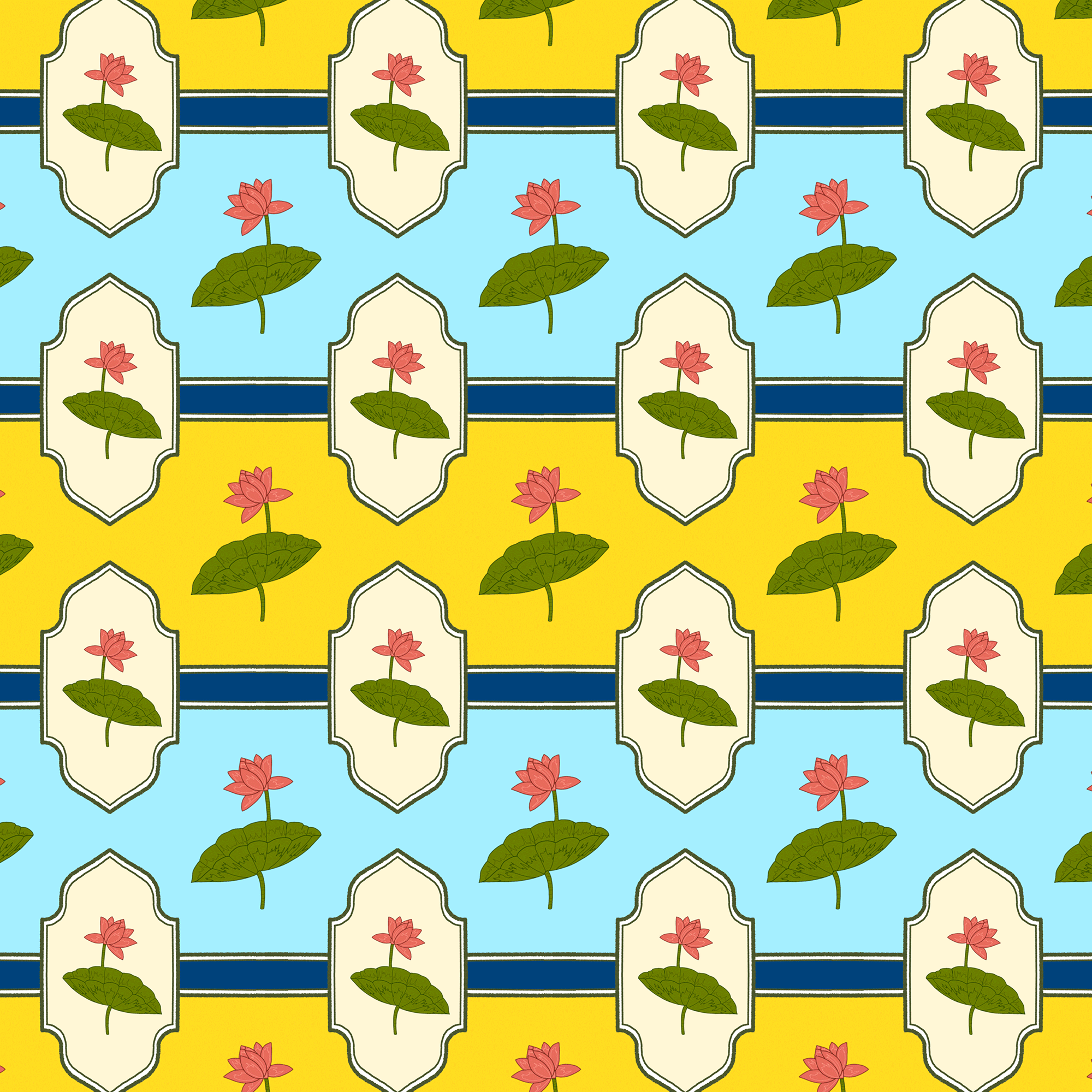
This artifact is inspired by Indian miniature paintings and the beauty found within their small, detailed compositions. Instead of recreating a single scene, the piece is designed as a miniature gallery made up of multiple small panels. Each tiny panel presents its own version of a painting through an abstract interpretation of traditional motifs found within miniature art.
The artifact includes twelve individual panels, and each one is unique. Some panels feature printed fabric designed from miniature painting elements such as florals and arches, while others are created through motifs that are etched or cut into acrylic. The panels vary in color, creating a sense of rhythm and variation across the gallery. Some panels are framed using mirror acrylic inspired by traditional miniature painting borders, and the base is also made of mirror acrylic. This reflective surface enhances the artifact by catching light and subtly echoing the panels above, adding another layer of visual interaction.
This combination of materials creates a contrast between opacity and transparency, allowing light to pass through certain areas while others hold detail and color. The repetition of motifs reflects the patterns often seen in miniature paintings, while the variations between each panel bring a sense of depth and individuality within the tiny gallery.
Overall, the piece explores how traditional art can be broken down, abstracted, and reinterpreted into a clean, modern, and spatial form. -
Punchy / Unapologetic / Semitic
Jeremy’s artifact draws from the rich cultural heritage of their Jewish background while also reflecting their identity as a genderfluid and queer designer. Although they were raised in a Jewish household—celebrating the High Holy Days and having a bar mitzvah—Jeremy did not feel a strong connection to the religious aspects of Judaism, instead experiencing it as a distant marker of identity. In contrast, cultural elements remained deeply embedded in their everyday life, from incorporating Yiddish expressions into their vocabulary to wearing a Star of David and even just admiring the mezuzah hung on their front door with each passing day. The final artifact takes the form of an abstract acrylic menorah, engraved with patterns inspired by those on the ark of the synagogue Jeremy once attended. Extending from each of the four “lights” are D-rings, referencing the hardware frequently used in their fashion design practice. Suspended from these rings are a series of printed textiles designed by Jeremy, drawing inspiration from the embroidery found on their tallit (the Jewish prayer shawl they wore on the day of their bar mitzvah).
-
Mid-century Modern / Reflection / Celebratory
My artifact is a personal tribute to my grandmother, Carol Mononen, and the vibrant environment she created throughout her life. Coming from a fashion background, I used this workshop to translate my experience with print and fabric into a 3D architectural form. The design is directly inspired by my grandmother’s love for color and her extensive collections, specifically the mid century modern, multi-colored Christmas ornaments popularly known as Shiny Brites, which she used on her rainbow-lit tree.
The silhouette of the artifact takes its shape from those vintage ornaments, while the use of transparency and light is a nod to the colorful glass bottles she collected. She kept these bottles on her windowsills, where they would catch the sun and fill the family room with reflected color. By designing this piece as a lamp, I wanted to recreate that lighting effect physically.
The details of the piece merge my design identity with my memories of my grandmother. I etched mid-century modern prints, the aesthetic I associate most with her, onto the blades and the center rings of the structure. Beyond her collections, my grandmother was a deeply kind person who had a profound impact on me. Whether it be my interest in design, vintage collecting, or my love for animals, I am who I am because of her. This project allowed me to learn new skills in 3D modeling while honoring the woman who first taught me to appreciate the little colorful things in life.
-
Ceremonial / Regal / Elaborate
The reason I chose to create a Quetzalcoatl head is rooted in my personal attachment to my Mayan heritage, which holds a capsule of gods and otherworldly beings of meaning. There is a rooted duality of the Feathered Serpent. Quetzalcoatl represents both responsibility and transformation. Quetzalcoalt serves as a vessel of divine purpose while also illustrating how failure in a significant endeavor can lead to new paths and deeper meaning. This balance between burden and rebirth resonates strongly with my understanding of personal growth. Rather than viewing failure as a stopping point, it becomes a moment of redirection.
As one of the earliest sun gods, the known god of the wind, and a symbolic bridge between the heavens and the earth, Quetzalcoatl exists between realms. This idea of existing “in-between” reflects the human condition: constantly navigating expectations, aspirations, and limitations. It suggests that identity is not fixed, but instead shaped through movements, learning, and resilience. The wind, in particular, becomes a more powerful metaphor.
Creating this piece gave me the satisfaction of knowing not only referencing mythology but also showcasing my own values and ambitions. I strive to embody that same sense of purpose and rapid adaptability, even with some imperfections. My goal is to bring forth the best of my abilities in this model, understanding that falling short does not diminish my path, but still carries a sense of deep, resounding strength. Like Quetzalcoatl, I can and will grow through both success and failure. -
Ornate / Familial / Scenic
This artifact draws from my distant family heritage in the Erzgebirge region of Germany and Vienna, Italy, merging two distinct cultural traditions into a single sculptural form. The piece takes inspiration from the traditional Weihnachtspyramide, or Christmas tower, a handcrafted object historically created by mining communities in Erzgebirge. These towers often feature intricate wooden scenes that celebrate the labor, resilience, and craftsmanship of miners, serving as both decorative objects and cultural narratives. In my interpretation, the vertical structure echoes this legacy, symbolizing not only the physicality of mining but also the layered histories embedded within the community.
At the same time, I incorporate influences from Italian carnival traditions, known for their vibrancy, theatricality, and ornate detailing. This influence is expressed through the carved elements of the artifact, which are intentionally exaggerated and decorative. The carvings are highlighted in a vivid blue, a deliberate contrast to the more subdued, natural tones typically associated with traditional German wooden craft. This color choice reflects the energy and spectacle of carnival, evoking celebration, movement, and festivity.
By combining these elements, the artifact becomes a hybrid cultural object, one that bridges restraint and exuberance, labor and celebration. It honors the quiet strength of working-class heritage while embracing the expressive, performative qualities of Italian festival traditions, ultimately creating a dialogue between two identities that shape my own.